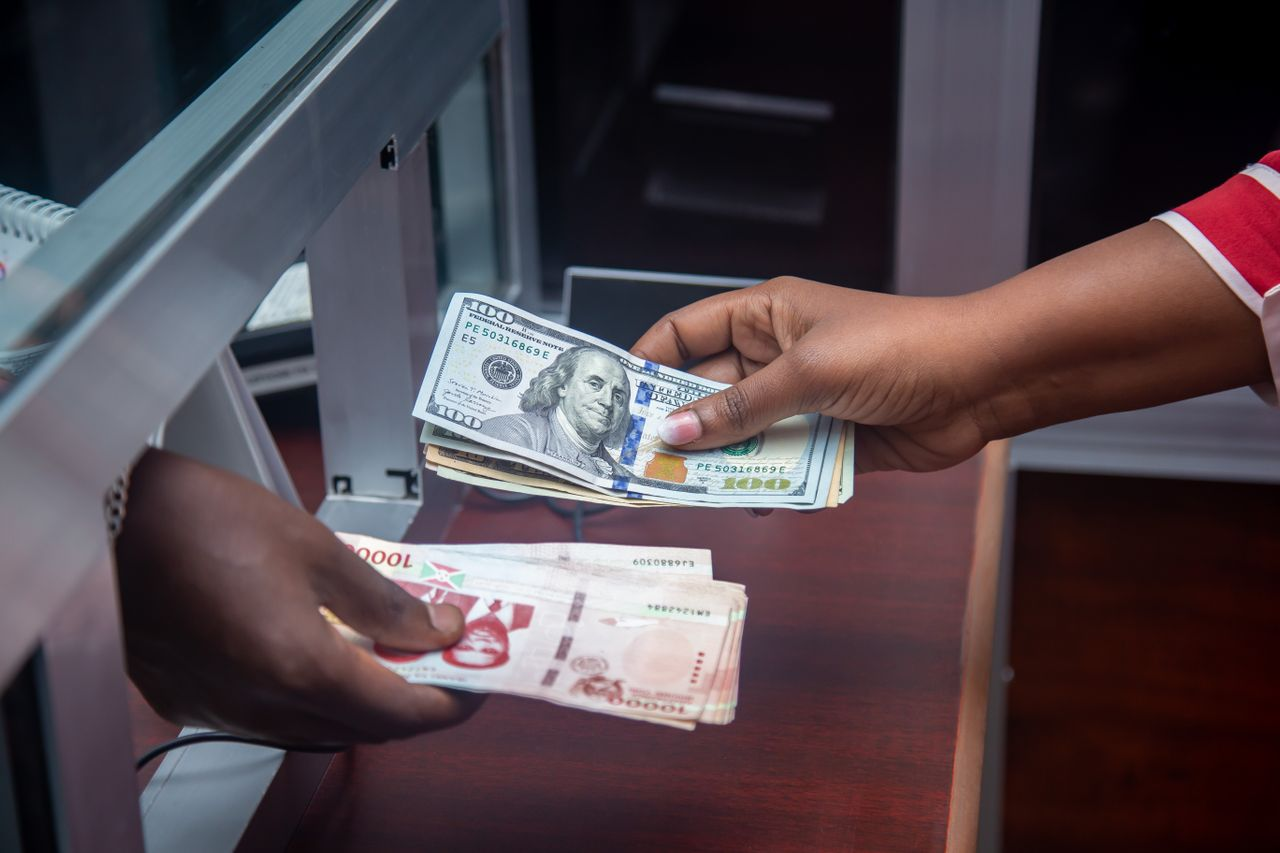

Commercial exchanges represent the foundation of our economy, particularly through SBLC or letters of credit. From the beginning, trade has consisted of an exchange between at least two people.
Initially, humans exchanged objects and products that they considered of equal value or whose quantity they adjusted so that the exchange seemed fair.
Subsequently, currency was created as a means of exchange. Thus, a person wishing to acquire a product from another person no longer needed to exchange it with one of their own products. They simply had to exchange it for currency.
Even today, currency is the means of exchange used in most transactions. However, given that trade is no longer only local but global, quite a bit of time can pass between a buyer’s order and the seller’s delivery.
And when it comes to large amounts, the seller demands a guarantee from the buyer that at the time of delivery, the latter will have sufficient funds.
The letter of credit, also called bill of exchange, and documentary credit are precisely two documents that guarantee that payment will indeed take place.
Clearly distinguishing the SBLC letter of credit and bill of exchange from documentary credit
These two documents are different, but what causes confusion is the fact that we often wrongly use the term “documentary credit” to designate an SBLC letter of credit.
The SBLC letter of credit
It’s also called SBLC since this acronym simply means “stand-by letter of credit.” The SBLC letter of credit, or bill of exchange, is a document issued by the banking establishment in the name of the buyer and which guarantees that in case of payment default by the latter, the bank will substitute itself to ensure payment to the seller.
In other words, the SBLC can be compared to a form of insurance that guarantees that the financial contract will be established, regardless of events.
An SBLC letter of credit is therefore not intended to be actually used, but it allows the buyer to reassure the seller.
To obtain a letter of credit, the buyer must make a request to their bank. The document is then transmitted to a notifying bank. If the buyer cannot pay the seller, the seller only has to turn to the notifying bank which will subsequently obtain reimbursement from the issuing bank.
Documentary credit
Documentary credit is an operation that consists of a banking establishment committing in the name of a buyer to make payment to a seller.
More precisely, through this process, the buyer commits to having payment made within a specific timeframe.
The issuing bank makes payment to a notifying bank which then issues payment confirmation to the seller.
The seller is thus assured of being paid since it’s the bank that handles it and as soon as documentary credit is established, the seller is certain to receive their payment.
The difference between SBLC and documentary credit
Now that we’ve defined both terms, we can easily understand what distinguishes the SBLC letter of credit from documentary credit.
Indeed, the bank transfer letter is primarily a guarantee that only triggers if the buyer can no longer make payment.
While documentary credit triggers automatically before the due date, it is the payment instrument of the transaction.
Advantages of the SBLC letter of credit
The letter of credit, or bill of exchange, presents several advantages. First, for the seller it guarantees that they will receive their payment, even if the buyer no longer has the capacity to make it.
Therefore, the SBLC is a way to reassure the seller and thus allows the buyer to be more convincing at the time of the commercial contract.
Similarly, since this solution only triggers in case of the buyer’s inability to pay, the latter doesn’t fully commit to credit, unlike documentary credit, which allows them to save money. However, if it becomes necessary to trigger the SBLC, then the cost becomes higher.
Thanks to the letter of credit, upstream payment of high amounts is facilitated and secured. This solution proves particularly interesting for companies that import from a supplier located in another country.
Advantages of documentary credit
Like the SBLC, documentary credit also guarantees the seller that they will receive their payment and that from the moment the credit has been issued, payment no longer depends on the buyer’s financial conditions.
Compared to the letter of credit, this solution has the advantage of being easier to negotiate with a bank.
Documentary credit is also an ideal choice for paying foreign imports by reassuring and convincing the seller.
What about documentary remittance?
Let’s talk a little about documentary remittance, which is the inverse of documentary credit. Indeed, it’s an operation that consists of having a banking establishment collect the amount owed by a buyer, in exchange for document delivery. Thus, we hand over documents to the buyer against payment of a bill of exchange. In this case, a bank can endorse the bill of exchange and this provides the seller with greater payment security.
There are different participants in this operation.
The principal who is the seller, the drawee or buyer, the remitting bank which handles the seller’s transactions and transmits documents to the buyer’s bank. Finally, the presenting bank which is the correspondent of the remitting bank. The commercial operation is carried out in several steps and begins with the agreement of both parties. Then, there’s the shipment of goods and document delivery.
The next step includes sending documents from the presenting bank, delivering documents to the buyer, acceptance and payment from the presenting bank to the remitting bank. Now, you’re no longer at risk of confusing documentary credit and documentary remittance.
Setting up an SBLC letter of credit and documentary credit
Setting up a letter of credit
The request for a stand-by letter of credit, or bill of exchange, must be made by the buyer. Generally, this request is made to their bank which then requires that the buyer be able to finance 100% of the credit amount, with the possibility of taking out a loan.
The SBLC is then transmitted either directly by the buyer to the seller, or by the issuing bank to the notifying bank which then transmits an issuance notification to the seller.
Subsequently, if payment is made by the buyer, the seller will not use the bank transfer letter.
However, if the buyer doesn’t make payment on time, the seller indicates to the notifying bank that they haven’t received payment. An attestation as well as proof are then required by the bank. The bank then transmits the letter to the issuing bank which is obligated to pay. The issuing bank can then request reimbursement (with fees) from its client.
Setting up documentary credit
The process is relatively similar to that of SBLC. Thus, it’s the buyer who handles making a documentary credit request to their bank (issuing bank).
Confirmation of documentary credit is then sent to the seller’s bank (notifying bank) which then transmits credit notification to its client.
The issuing bank then has a deadline to respect to trigger payment.
How much do SBLC and documentary credit cost?
For documentary credit, the issuing bank generally requires:
- An opening commission amounting to 1% per year on average
- A usage commission representing about 0.125% per quarter
- A risk commission most often amounting to 0.25% per quarter
- A maturity commission of 0.08% per month on average
The notifying bank also requires commissions:
- A notification commission very often amounting to 0.1% per year
- A confirmation commission representing about 0.25% per quarter
- A document lifting commission of 0.15% on average
- A payment commission corresponding to about 0.15%
Basically, the issuing bank’s commissions are financed by the buyer, while those of the notifying bank are paid by the seller. However, both parties can agree on other conditions.
Regarding the letter of credit, the commission required by the issuing bank varies on average from 0.5% to 2% per year. For the notifying bank, the commission is generally less than 1%. In case of SBLC triggering, the issuing bank will require its client to reimburse the payment with additional fees, or in the form of credit with interest.