HSBC or Barclays for international business banking services? Choosing a British bank for an international company depends on many factors: the countries in which the company operates, the currencies used, the frequency of international payments, financing needs, foreign exchange risk management, and the level of support required.
Both institutions offer solutions for companies with international activities. HSBC particularly highlights its international network, multi-currency solutions, and payment and trade finance services. Barclays also offers business accounts, international payments, currency solutions, and services for companies expanding their operations abroad.
So, HSBC vs Barclays business account: which bank should you choose?
HSBC can be particularly attractive for companies with complex international flows or a presence in several markets. Barclays can be a relevant solution for companies looking for a British bank with international services, particularly for payments and currency management.
The best choice therefore depends on the company’s profile rather than the bank’s name.
HSBC vs Barclays: The Main Differences
Before choosing an HSBC international business account or a Barclays international business account, it is useful to compare the main criteria.
| Criteria | HSBC | Barclays |
|---|---|---|
| British bank | Yes | Yes |
| International payments | Yes | Yes |
| Currency accounts | Yes | Yes |
| Multi-currency solutions | Global Wallet and currency accounts | Currency Accounts and FX solutions |
| Foreign exchange risk management | Yes | Yes |
| International trade | Highly developed | Developed |
| International support | Highly developed | Developed |
| Solutions for international companies | Yes | Yes |
| Corporate services | Very wide range | Wide range |
HSBC notably offers international accounts in US dollars, euros, and other freely tradable currencies, as well as solutions for managing several currencies via HSBCnet.
Barclays also allows companies to receive various currency payments and offers currency accounts as well as foreign exchange solutions such as BARX Commercial.
HSBC International Business Account: What Are the Advantages?
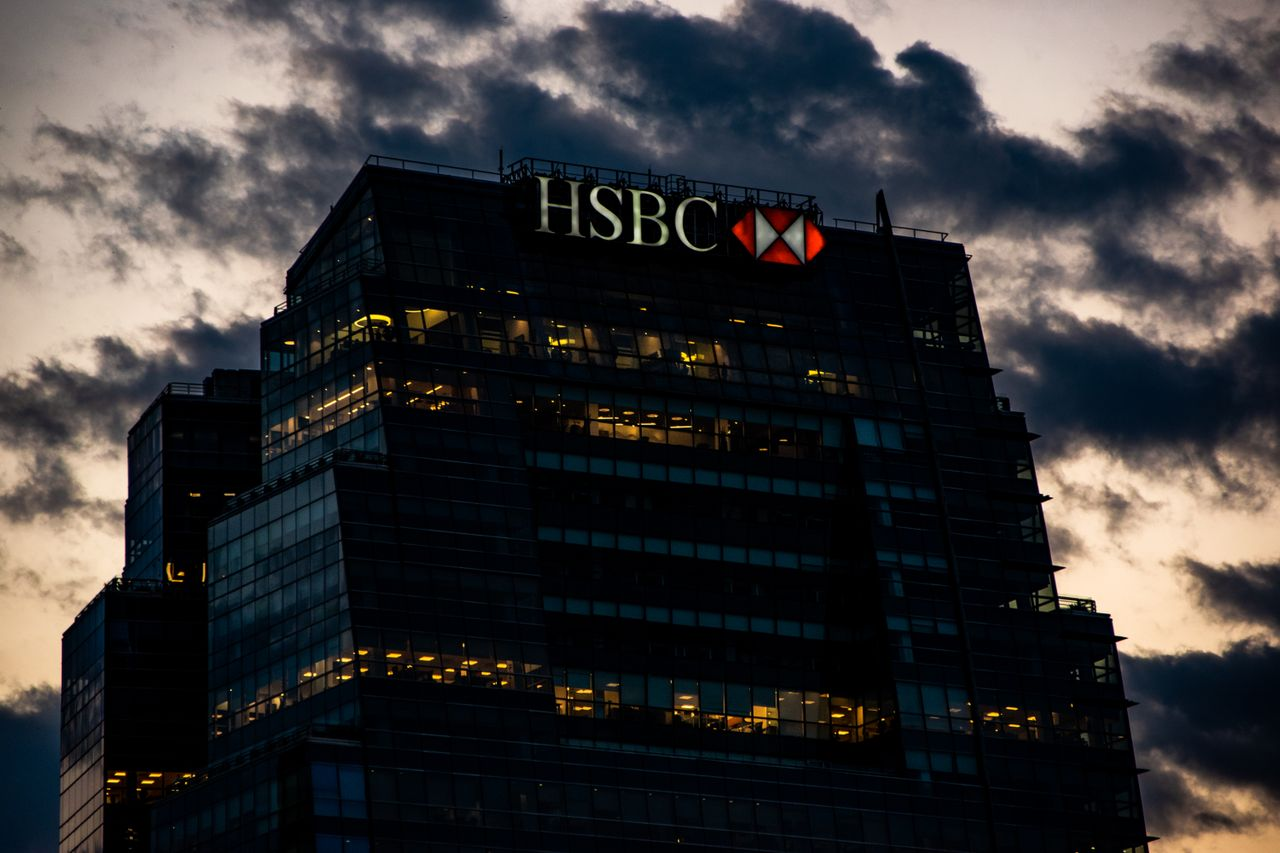
HSBC has a strong international orientation and offers a range of solutions for companies that import, export, or work with foreign customers and suppliers.
An HSBC international business account can be particularly attractive for a company that:
- invoices customers in several countries;
- pays international suppliers;
- uses several currencies;
- wants to centralize its international flows;
- is gradually developing its presence abroad;
- is looking for trade finance solutions;
- needs to manage its foreign exchange risk exposure.
HSBC notably offers international accounts in USD, EUR, and most freely tradable currencies. Its offering also includes international current accounts, instant-access savings accounts, and fixed-term deposits in certain currencies.
HSBC Global Wallet
For companies with numerous international flows, HSBC also offers Global Wallet, which allows eligible companies to hold, receive, and send several currencies from a single interface.
The solution supports currencies such as EUR, USD, GBP, JPY, SGD, HKD, and CNY, subject to applicable conditions and limits.
This can be particularly useful for a company working simultaneously with Europe, the United States, and Asia.
An Offering Geared Toward International Growth
HSBC also highlights its payment, foreign exchange, and international trade finance solutions. For companies that import goods, export, or manage international supply chains, these services can matter more than a simple current account.
In practice, HSBC can therefore be particularly attractive for a company whose international operations represent a significant part of its activity.
Barclays International Business Account: What Are the Advantages?

Barclays is also a major British bank offering services to companies that work with foreign markets.
A Barclays international business account can suit a company that wants to, among other things:
- make international payments;
- receive payments from abroad;
- hold currency accounts;
- manage its foreign exchange needs;
- develop import-export activities;
- maintain a banking relationship with a major British bank.
Barclays states that its business customers can receive payments in different currencies into sterling or foreign currency accounts. The bank also notes that companies can use BARX Commercial to obtain an exchange rate when carrying out certain foreign exchange transactions.
Barclays International Payments
Companies can make international payments via Barclays’ digital channels, with timeframes that vary depending on the country and currency. Barclays notes in particular that payments to Europe generally arrive within one business day and that some payments to the United States can arrive the same day or the next business day.
For international payments requiring currency conversion, Barclays applies a reference rate and a conversion fee depending on the type of customer and the service used. Applicable terms and fees should therefore be checked before each transaction.
A Solution for Internationally Active British Companies
Barclays also offers resources dedicated to companies that import, export, or are developing their international activities.
For a company that wants to keep a British bank while growing its international operations, Barclays can therefore be a worthwhile option to consider.
HSBC vs Barclays Business Account: Which Bank for Currencies?
For an international company, currency management can be a decisive criterion.
Take the example of a British company that invoices its customers in:
- GBP in the United Kingdom;
- EUR in the European Union;
- USD in the United States;
- SGD in Singapore.
In this case, the cost and simplicity of currency conversion can have a significant impact on margins.
HSBC stands out in particular for its multi-currency solutions and its Global Wallet, which allows eligible customers to manage several currencies within a single solution.
Barclays, for its part, offers Currency Accounts and foreign exchange solutions for businesses.
The best choice will therefore depend on the currencies used, transaction volumes, and the frequency of conversions.
HSBC or Barclays for International Payments?
Both banks allow companies to send and receive international payments.
HSBC notably offers international payments via HSBCnet as well as solutions allowing payments in certain currencies as if the company were making a local payment, depending on eligibility and destination. Its “Pay Local” solution covers markets such as the United States, the eurozone, China, Hong Kong, Singapore, and Japan.
Barclays also allows international payments to be made via its digital channels and provides the necessary information for international transfers, including IBAN and SWIFT/BIC where required.
For an international company, however, it is important to look beyond the displayed fees.
The important criteria are:
- exchange rate;
- transfer fees;
- intermediary bank fees;
- execution speed;
- available currencies;
- payment limits;
- ability to centralize accounts;
- reporting tools;
- banking support.
Which Bank for a Company Engaged in International Trade?
International trade often requires more than a simple bank account.
A company that imports or exports may need:
- international supplier payments;
- customer collections;
- working capital financing;
- foreign exchange risk management;
- bank guarantees;
- trade finance;
- treasury solutions;
- management of several currencies.
HSBC particularly highlights its Global Trade Solutions, payment, foreign exchange, and financing solutions for international companies.
For a company whose business model relies heavily on international trade, this breadth of offering can be an advantage.
Barclays also has resources and solutions for companies that import, export, or want to develop their international activities.
What Is the Best British Bank for International Companies?
The question “what is the best British bank for international companies?” cannot be answered the same way for every company.
HSBC can be particularly attractive if:
- your company works with several regions of the world;
- you need several currencies;
- you have significant flows in USD, EUR, or Asian currencies;
- you are developing an international business;
- you have trade finance needs;
- you want to centralize several international operations.
Barclays can be particularly attractive if:
- you are looking for a major British bank;
- your international operations are mainly related to payments and foreign exchange;
- you want to manage currency accounts;
- your company is gradually developing its international activities;
- you want a British banking relationship with international services.
The choice should also take into account the company’s eligibility and the bank’s acceptance criteria.
Is Opening an International Business Account Guaranteed?

No.
It is important to distinguish between the ability to apply for a bank account and the actual acceptance of the application.
HSBC and Barclays apply their own compliance procedures and may request various information regarding the company, its directors, its beneficial owners, its activity, and its financial flows.
For an international company, the bank may want to understand:
- What is the company’s actual activity?
- What are its main markets?
- Who are its customers and suppliers?
- Where do the funds come from?
- In which countries will payments be made?
- Which currencies will be used?
- What transaction volumes are expected?
A clear, well-documented file can make the due diligence process easier.
However, there is no guarantee of account opening: the final decision always rests with the bank.
HSBC or Barclays: Our Verdict
For strong international activity: advantage HSBC HSBC has a particularly well-developed offering for companies with complex international needs, particularly in terms of payments, currencies, treasury, and international trade.
For a British company with everyday international needs: Barclays can be relevant Barclays offers business accounts, international payments, and currency solutions, which can meet the needs of a British company that is starting or continuing its international development.
For companies using several currencies: compare both HSBC Global Wallet can be particularly attractive for centralizing certain multi-currency operations. Barclays also offers currency accounts and foreign exchange tools.
For international trade: HSBC deserves particular attention HSBC’s range of solutions dedicated to trade finance, payments, and foreign exchange risk management can be an important criterion for companies with international supply chains.
FAQ: HSBC vs Barclays Business Account
What is the best British bank for international companies?
HSBC and Barclays are both important options, but HSBC can be particularly well suited to companies with complex international operations and significant multi-currency needs. Barclays can suit companies looking for a British bank with international services, particularly for payments and currencies.
What is the best HSBC or Barclays international business account?
There is no universal best account. The choice depends in particular on the currencies used, the countries involved, the volume of payments, foreign exchange needs, and the financing services sought.
Is HSBC suitable for companies working with Asia?
Yes. HSBC has a strong international orientation and offers solutions that allow, among other things, the management of certain Asian currencies and international payments. HSBC Global Wallet, for example, supports currencies such as CNY, HKD, JPY, and SGD, subject to applicable conditions.
Does Barclays allow companies to receive international payments?
Yes. Barclays allows companies to receive international payments and provides the necessary IBAN and SWIFT/BIC information depending on the type of payment.
Which bank should be chosen for a company that invoices in EUR and USD?
Both banks can meet this type of need. The decision should be based on foreign exchange fees, payment costs, available currencies, management tools, and expected transaction volumes.
Can an international business account be opened without a genuine business activity?
Opening an account depends on the bank’s analysis. A company must be able to explain its activity, its financial flows, and the source of its funds. A structure without clear economic justification may encounter greater difficulties during the compliance process.
Conclusion
HSBC vs Barclays business account: which bank should you choose?
For a company with international ambitions, HSBC can be particularly attractive thanks to its global orientation, its multi-currency solutions, and its offering for international trade.
Barclays is also a solid option for British companies that want to manage international payments, currency accounts, and foreign exchange operations.
The right choice, however, depends on each company’s specific situation: the countries of its customers and suppliers, currencies, transaction volumes, financing needs, legal structure, and compliance requirements.
At ICD Fiduciaries, we support entrepreneurs and international companies in setting up structures tailored to their needs, including for company formation and the search for international business banking solutions.
Rather than choosing a bank solely on its reputation, it is better to assess the compatibility between your business activity, your international flows, and the bank’s acceptance criteria.