Do you want to understand how certain companies legally reduce their tax burden in the United Kingdom?
We present the agency agreement, a strategic mechanism still widely used in international business structuring.
- What is an agency agreement in the United Kingdom?
An agency agreement is a legal model whereby a British limited liability company acts as an official agent for a foreign parent company, generally incorporated in a low-tax jurisdiction such as Gibraltar, Delaware, or Hong Kong.
The British company retains a small commission, typically 10 to 20% of turnover, and transfers the balance to the parent company in the form of agency fees.
The result? A significant reduction in corporation tax, often to 2 to 5%, instead of the standard rate of 19% or 20% in the United Kingdom.
- How does it work?
Here is a simplified overview:
- Step 1: Company formation A British limited liability company is incorporated and owned 100% by an offshore parent company.
- Step 2: Signing the agency agreement A formal contract defines the roles, responsibilities, and revenue-sharing arrangements.
- Step 3: Billing The British entity invoices its clients and transfers the majority of revenue to the offshore parent company.
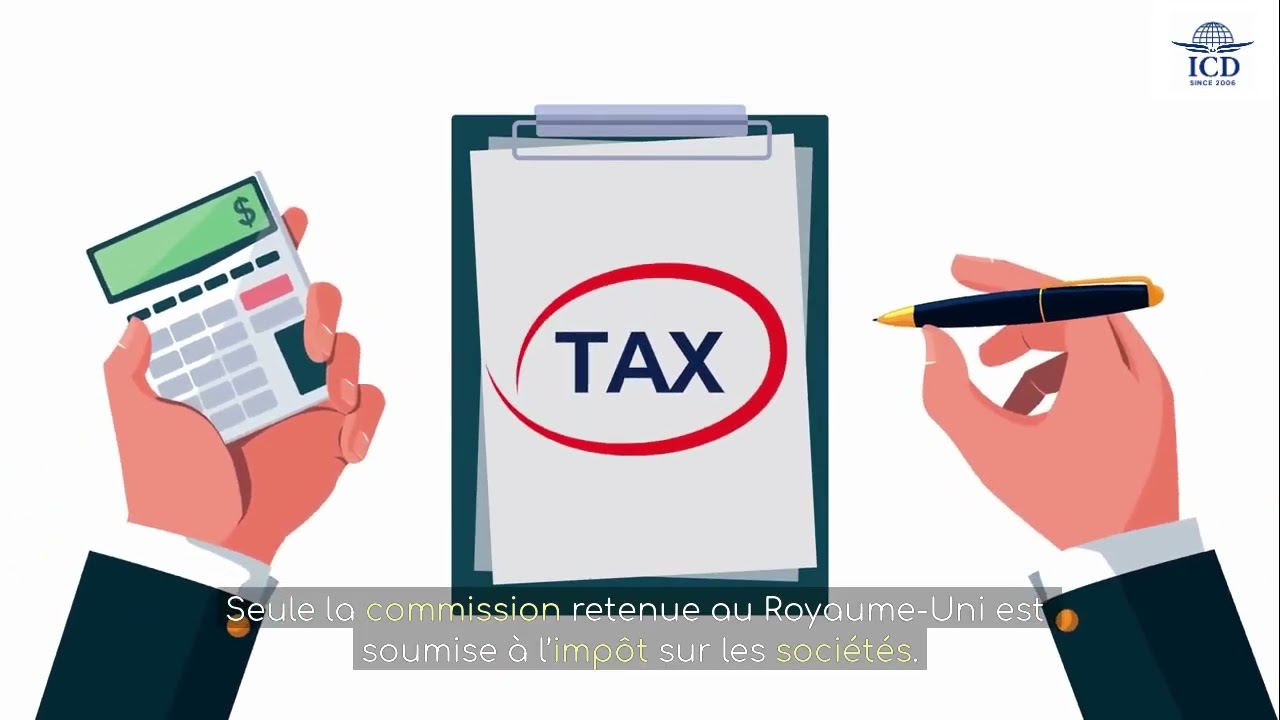
- Step 4: Taxation Only the retained commission is subject to corporation tax in the United Kingdom.
- What are the advantages?
- Tax efficiency on a limited portion of profits
- Enhanced credibility through a registered business address in the United Kingdom
- Administrative simplicity: no minimum capital, quick setup, and moderate accounting requirements
- What are the risks?
- HMRC scrutiny: Agency activity must be genuine; structures with purely tax motivations may be penalized.
- Lack of substance can lead authorities to classify the entity as a shell company.
- Banking challenges: Without credible local presence, banks may refuse to open accounts.
- How to strengthen the structure?
To ensure legal and operational compliance, companies must:
- Establish a physical presence: an office, VAT registration, local staff or representatives
- Retain complete supporting documentation: contracts, invoices, accounts, and bank statements
- Meet annual obligations: filing accounts, audits if necessary, and tax returns
- Some companies even add a European holding company, often in Ireland, to increase substance and benefit from additional tax advantages
- What costs should you expect?
- British limited liability company formation
- Offshore parent company setup
- Ongoing fees: accounting, domiciliation, filings, and administrative costs
When properly implemented and compliant with regulations, the agency agreement model offers an efficient tax structure while strengthening the credibility of business presence in the United Kingdom.
However, caution is advised: transparency and substance are essential.